Criticism Post #3 “Racks In The Middle”

In this weeks criticism post I chose to analyze Nipsey Hussle’s song “Racks In The Middle” with close-text analysis. Close-text analysis is the breaking down of a text in a way that makes it understandable for readers, and taking a deeper look at each individual section. We can see how close-text is used in Robert E. Terrill’s “Unity and Duality in Barak Obama’s ‘A More Perfect Union.'” This article analyzes Barak Obama’s speech back in 2008 where he addresses race and the “double consciousness” when he invites listeners to share this phenomenon with him.

“Double consciousness” is the type of alienation of “always looking at one’s self through the eyes of others, of measuring one’s soul by the tape of a world that looks on in amused contempt and pity” (Terrill 363). This article also states that “attaining a public voice requires African Americans to merge themselves into a ‘better and truer’ version of themselves”(Terrill 363). The part I liked most about the speech was that Barak Obama challenged his audience to view themselves in the eyes of others, to experience the “double consciousness” even if it was just temporarily. By doing this Obama made his listeners conscious of the racial divide in this country and to engage themselves in by using the Golden Rule : which is the principle of treating others the way you want to be treated.

The article was very insightful on Obama’s 2008 “A More Perfect Union,” but it was also very insightful on how close-text analysis is used.

Like any good song, there are many different lyrics and verses but do we really know what they mean? Sometimes I find myself singing a song or listening to the lyrics, and after the first couple of times I don’t realize what is really being said until I know the whole song word for word or someone points it out to me. Nipsey Hussle’s song “Racks In The Middle” ft. Roddy Ricch and Hit Boy debuted at #44 on the Billboard Hot 100 during April 13, 2019, and just a week later climbed its was up to #26! This is one of the songs that received a GRAMMY award on January 26, 2020 for “Best Rap Performance.”

Nipsey Hussle chose to do this song with Roddy Ricch because he was up and coming in the music industry and Nipsey felt he needed to embrace him whether it was doing this song with him or simply acknowledging the work his was doing. On the other hand Hit Boy was the one with the song “Racks In The Middle” that he was creating for his album and Nipsey came into the studio session and just starting rapping lyrics to the song, didn’t think about it or talk about it, just starting working with it like it was meant to be.

Nipsey Hussle’s “Racks In The Middle” broken down by Genius.

The song as a whole was good enough to win a GRAMMY award but I want to break down a set of lyrics that added soul and feeling to the song from the great Nipsey Hussle himself. In the video above staring at 5 minutes and 30 seconds begin the lyrics :

"Damn, I wish my nigga Fatts was here
How you die thirty somethin' after banging all them years?
Grammy-nominated, in the sauna sheddin' tears
All this money, power, fame and I can't make you reappear"

The first line “Damn, I wish my nigga Fatts was here is about Nipsey’s best friend “Fatts” who he said he had a genuinely good friendship with, someone he rode his bike with around their block and someone who was a definition or a “ride or die.” Growing up in the streets of South Central, Los Angeles they encountered a lot of gang violence and came upon many young men who felt pressured by gangs and being in the hood that they would fight their “homies” for acceptance, but Fatts and Nipsey never encountered that. Nipsey explained them as the type of homies that would never turn on each other, and Fatts was one of the few that really believed they could do something bigger and better than gang bang.

This leads to the second line “How you die thirty somethin’ after banging all them years?” that Nipsey is questioning why Fatts had to be taken from this earth at 30 years old. He was supposed to be their for their GRAMMY nomination, for putting in years and years of work with Nipsey to create a better life for themselves, getting out of the gang lifestyle that Fatts continuously talked about.

Leading to the third and final line “Grammy-nominated, in the sauna sheddin’ tears All this money, power, fame and I can’t make you reappear.” When Nipsey was rapping those lyrics in the studio it was very emotional for him and hit deep about the fact of him losing his best friends to the streets and just having to embrace the only life they knew. In the Genius video Nipsey said he had tears rolling down his face when rapping those lyrics and felt that his emotion was what made this song so powerful and gave it life. When Nipsey got the nomination he admitted to feeling guilty and torn up because he felt it was wrong to be excited or happy, when all he could think about was wishing his best friends was there to see it and appreciate that moment with him. No money, power, or fame could ever bring his best friend back to enjoying this deserved moment with him. It brought to life the cold reality that bullets ain’t got no names…
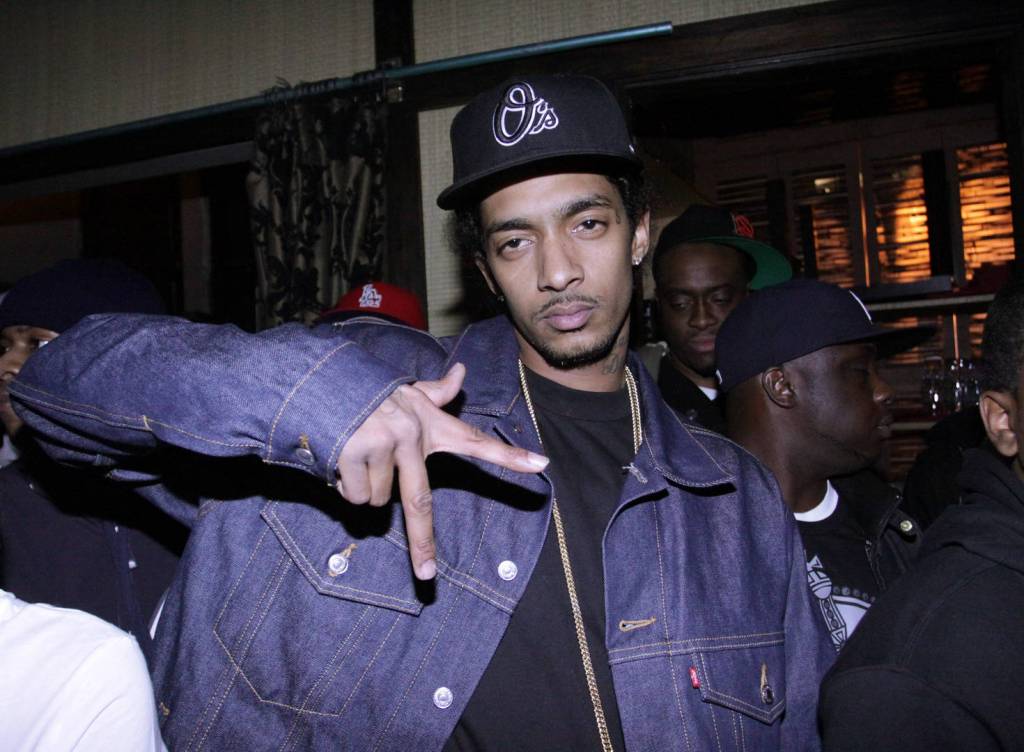
https://genius.com/Nipsey-hussle-racks-in-the-middle-lyrics https://djbooth.net/features/2019-03-07-nipsey-hustle-as-told-by-nipsey-hussle
Criticism Post #2 “Bullets Ain’t Got No Name”

This week we went over the Neo-Classical and Close-Text approach when looking at a text or any different medium of communication. The Neo-Classical approach I chose to blog about this week is “The Canon” which is broken up into five different parts :

  1. Invention : how did they come up with it? Inspiration? Outside text?
  2. Arrangement : order, why did they order it this way? Procedure, Structure.
  3. Style : person’s style, delivery style, embellishment?
  4. Delivery : fast? quick? Editing or cinematography?
  5. Memory : memorizing, memorable or not memorable and why not?

In this post I want to address the Invention of Nipsey Hussle’s first album “Bullets Ain’t Got No Name.” INVENTION is the reason as to why an artist comes up with something, their inspiration, their big WHY.

In this interview of Nipsey Hussle, the eight second mark is the beginning of his take on what it means to the saying “bullets ain’t got no name.” He explains that in one aspect of the term it is the “South Central state of mind” where gang members in Los Angeles go on what they call “missions” which is purposely going into their enemies’ “hood” and blatantly killing someone. He goes into further detail by saying that if you are a Blood and go into a Crip area it does not matter who you are or what your name is, you are the enemy and you will ultimately get killed, hence the bullet has no name for who “its” victims are. Growing up, Nipsey Hussle was part of that lifestyle seeing 15 to 16 year old kids go on “missions” everyday not knowing if the bullet was going to strike them or not.

The second half of the interview starting around two minutes, Nipsey Hussle explains that young men think that it shows a sign of manhood when getting a gun and shooting it and he wanted to speak on that from experience, from the inside perspective. “Bullets ain’t got no name” is somewhat of a universal truth in that when you shoot a gun it is shot to kill and you have to accept the repercussions that when you shoot you may hit an innocent bystander rather than the person the bullet was meant for.

Nipsey Hussle Interview on “Bullets Ain’t Got No Name”

This album along with all of Nipsey Hussle’s songs are created with the intention that the gang life should not be glorified, and his rap is the reality of what it is like to be part of that. He was a huge advocate against gang violence since he saw so much of it growing up in South Central Los Angeles in the Crenshaw district. His messages are sent to impact gang culture in hopes that his listeners realize that he is a human like everyone else and wherever he ended up, which was a successful entrepreneur, husband, father, and grammy award winner, any other kid on his block could end up there too.

Criticism Post #1 “Victory Lap”

This semester I will be posting about Ermias Joseph Asghedom, famously known as “Nipsey Hustle.” Nipsey Hussle was a father of two, a Los Angeles entrepreneur, American Activist, and Grammy Award winning rapper. He was shot and killed Sunday March 31, 2019 at the age of 33, in front of his clothing store “The Marathon Clothing” on Crenshaw and Slauson in Los Angeles, California. This information is important to the concept of the rhetorical situation because different factors need to be understood when explaining the exigence of different artists and the audiences they attract.

The Rhetorical Situation is composed of three parts : exigence, audience, and constraints/opportunities. EXIGENCE is the issue, problem, or situation that causes or prompts someone to write or speak. In this studio interview with Mass Appeal featuring Nipsey Hussle he explains that his reason for writing music was his background of gang violence and his time spent trying to survive the streets from the war he saw in everyday life. Nipsey Hussle’s explained his issues and problems as being “real life things,” “street shit,” such as his brother being sent to the penitentiary, life events that never got written about because it doesn’t belong on the front page but it affected his life dramatically.

Nipsey’s song “Dedication” from the album Victory Lap features Kendrick Lamar, another Los Angeles grown rapper who also shares his story, about rising from the hood to becoming two of the best rappers of their generation. The lyrics below explain how Nipsey Hussle was named “the Tupac of this generation” because of his intelligence and curiosity for new opportunities. Though he wanted better for himself, his frustrations of the prison complex and his destined fate of being in jail or dead lead him to the streets and at a crossroads to if he even had the means to stay dedicated to the hustle.

This the remedy, the separation
2Pac of my generation, blue pill in the fuckin’ Matrix
Red rose in the gray pavement
Young black nigga trapped and he can’t change it

Know he a genius, he just can’t claim it
‘Cause they left him no platforms to explain it
He frustrated so he get faded
But deep down inside he know you can’t fade him
How long should I stay dedicated?
How long ’til opportunity meet preparation?”

Studio Interview with Nipsey Hussle Breaking down the “Victory Lap” album and overcoming obstacles

The second concept of the rhetorical situation is AUDIENCE, who is the audience, and are there multiple audiences? Being from Los Angeles, a big portion of Nipsey Hussle’s followers and listeners are from the West Coast, especially from Southern California. Nipsey’s music was classified as “West Coast gangsta rap” differentiating his sound from pop or hip-hop. Like all rappers trying to make it out, his fan base was small at first but as Nipsey began to rise and build his empire other artists started mentioning his name and became followers themselves. Jay-Z, Lil Wayne, Drake, Rihanna, Snoop Dog, PDiddy, all famous and well known artists across the country labeled themselves as fans of Nipsey Hussle and helped get his name out, but his talents and messages behind the music were the main factors that got him far in the world before his passing.

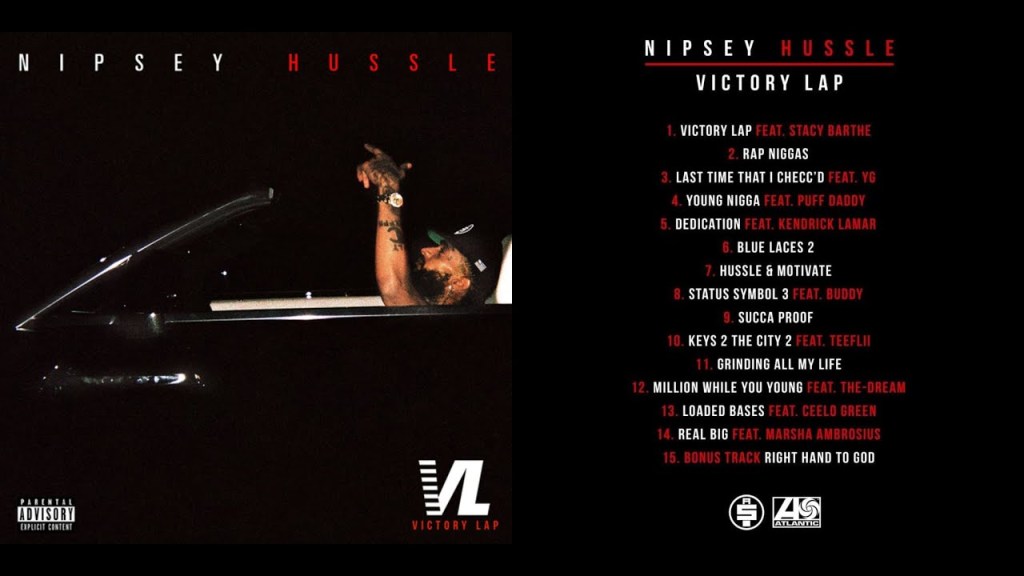
Nipsey began his career in 2005 selling mixtapes out of his car, helping him gain respect from his peers and build a following from fans of his music. In 2013 he charged $100 dollars for his mixtape “Crenshaw” scoring cash and publicity when Jay-Z bought 100 copies for $10,000 dollars. In 2018 his album “Victory Lap” debuted at No.4 on Billboard’s 200 albums charts earning him a GRAMMY nomination in 2018 and 2019. Not only did Nipsey Hussle get nominated for for best rap song and best rap album, he won two GRAMMY awards at the 62nd ANNUAL GRAMMY AWARDS for “Racks in the Middle” being the best rap performance and “Higher” for best rap/sung performance.

Nipsey Hussle’s “Victory Lap” Album

The last concept in the Rhetorical Situation are constraints and opportunities. CONSTRAINTS and OPPORTUNITIES are the the factors that you are allowed to do or are not allowed to do. Some opportunities Nipsey Hussle took advantage of was using profanity in his lyrics. Though it can be looked down upon to use curse words especially to a younger audience it is the reality of what Nipsey is trying to tell through his lyrics. As a rapper there is a very different tone used compared to a country singer or R&B artist, but Nipsey had a way of using that tone to tell a story to his listeners about the obstacles he overcame and the language used in the streets.

I am hoping this criticism post served as an introduction to Ermias Asghedom, or “Nipsey Hussle.” Even if you do not like rap music I hope you can keep an open mind and have a better understanding for the meanings behind the lyrics.

Design a site like this with WordPress.com
Get started