This semester I will be posting about Ermias Joseph Asghedom, famously known as “Nipsey Hustle.” Nipsey Hussle was a father of two, a Los Angeles entrepreneur, American Activist, and Grammy Award winning rapper. He was shot and killed Sunday March 31, 2019 at the age of 33, in front of his clothing store “The Marathon Clothing” on Crenshaw and Slauson in Los Angeles, California. This information is important to the concept of the rhetorical situation because different factors need to be understood when explaining the exigence of different artists and the audiences they attract.
According to Bittzer, “rhetorical situation is a response to discourse and speech. It should be understood as an attempt to revive the notion of rhetorical situation, to provide at least the outline of an adequate conception of it, and to establish it as a controlling and fundamental concern of rhetorical theory” (Bitzer 47). The Rhetorical Situation is composed of three parts : exigence, audience, and constraints/ opportunities. EXIGENCE is the issue, problem, or situation that causes or prompts someone to write or speak. In this studio interview with Mass Appeal featuring Nipsey Hussle he explains that his reason for writing music was his background of gang violence and his time spent trying to survive the streets from the war he saw in everyday life. Nipsey Hussle’s explained his issues and problems as being “real life things,” “street shit,” such as his brother being sent to the penitentiary, life events that never got written about because it doesn’t belong on the front page but it affected his life dramatically. We as listeners have to ask ourselves this, do his songs pose a solution for his troubling experiences or is he simply creating content he thinks his listeners will adhere to?
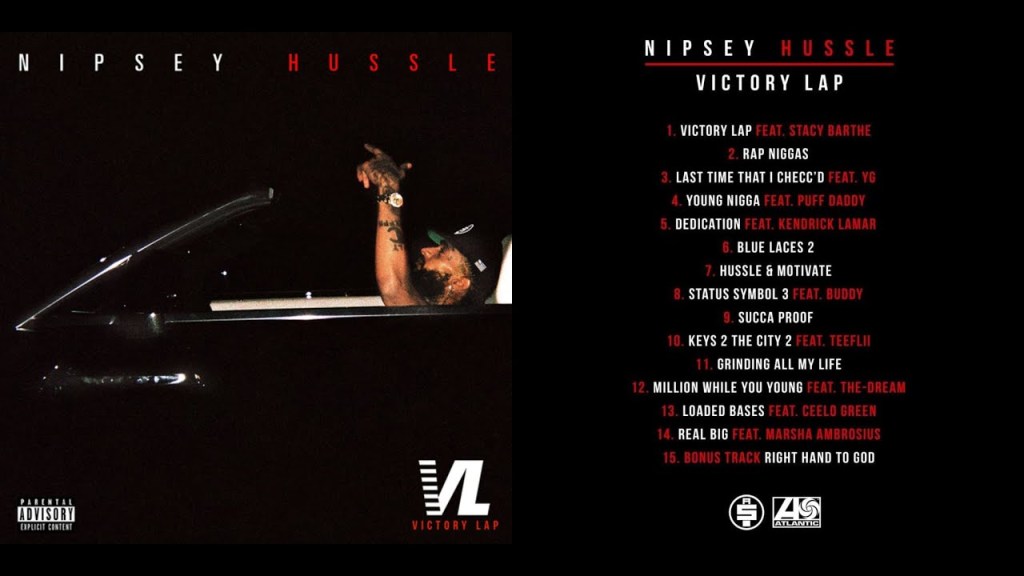
Nipsey’s song “Dedication” from the album Victory Lap features Kendrick Lamar, another Los Angeles grown rapper who also shares his story, about rising from the hood to becoming two of the best rappers of their generation. The lyrics below explain how Nipsey Hussle was named “the Tupac of this generation” because of his intelligence and curiosity for new opportunities. Though he wanted better for himself, his frustrations of the prison complex and his destined fate of being in jail or dead lead him to the streets and at a crossroads to if he even had the means to stay dedicated to the hustle.
“This the remedy, the separation
2Pac of my generation, blue pill in the fuckin’ Matrix
Red rose in the gray pavement
Young black nigga trapped and he can’t change it
Know he a genius, he just can’t claim it
‘Cause they left him no platforms to explain it
He frustrated so he get faded
But deep down inside he know you can’t fade him
How long should I stay dedicated?
How long ’til opportunity meet preparation?”
The second concept of the rhetorical situation is AUDIENCE, who is the audience, and are there multiple audiences? Being from Los Angeles, a big portion of Nipsey Hussle’s followers and listeners are from the West Coast, especially from Southern California. Nipsey’s music was classified as “West Coast gangsta rap” differentiating his sound from pop or hip-hop. Like all rappers trying to make it out, his fan base was small at first but as Nipsey began to rise and build his empire other artists started mentioning his name and became followers themselves. Jay-Z, Lil Wayne, Drake, Rihanna, Snoop Dog, PDiddy, all famous and well known artists across the country labeled themselves as fans of Nipsey Hussle and helped get his name out, but his talents and messages behind the music were the main factors that got him far in the world before his passing.
Nipsey began his career in 2005 selling mixtapes out of his car, helping him gain respect from his peers and build a following from fans of his music. In 2013 he charged $100 dollars for his mixtape “Crenshaw” scoring cash and publicity when Jay-Z bought 100 copies for $10,000 dollars. In 2018 his album “Victory Lap” debuted at No.4 on Billboard’s 200 albums charts earning him a GRAMMY nomination in 2018 and 2019. Not only did Nipsey Hussle get nominated for for best rap song and best rap album, he won two GRAMMY awards at the 62nd ANNUAL GRAMMY AWARDS for “Racks in the Middle” being the best rap performance and “Higher” for best rap/sung performance.
The last concept in the Rhetorical Situation are constraints and opportunities. CONSTRAINTS and OPPORTUNITIES are the the factors that you are allowed to do or are not allowed to do. Some opportunities Nipsey Hussle took advantage of was using profanity in his lyrics. Though it can be looked down upon to use curse words especially to a younger audience it is the reality of what Nipsey is trying to tell through his lyrics. As a rapper there is a very different tone used compared to a country singer or R&B artist, but Nipsey had a way of using that tone to tell a story to his listeners about the obstacles he overcame and the language used in the streets. On the other hand, some constraints that Nipsey Hussle may stumble upon is the simple reality that he was gang affiliated and the it is not looked upon to listen to such content being young and vulnerable. The younger generation lives by idols, especially rappers and social influencers such as Hussle, though he tries to use rap in a positive way it can easily be spun into something negative.
I am hoping this criticism post served as an introduction to Ermias Asghedom, or “Nipsey Hussle.” Even if you do not like rap music I hope you can keep an open mind and have a better understanding for the meanings behind the lyrics.
 Christina's Blog
One thought on “Criticism Post #1 “Victory Lap””