“The mayor called Hussle ‘an artist who touched our city.’ The police chief hailed him as a peacemaker. The head of the police commission said he had plans to meet with Hussle to discuss ways to reduce gang violence” (Arango, T.). An article in the New York Times highlighted Nipsey Hussle’s commitment to making his neighborhood a better place, while being LAPD’s main focus under a major investigation.
In this weeks criticism post I want to use the tragic-comic framing methods to describe Nipsey Hussle. The “tragic” framing method has emphasis on punishment, leading to closure with scapegoats to relieve collective guilts. On the other hand, the “comic” framing method is the emphasis on self-awareness, reflection, and shared responsibility. The media is able to frame and portray people in different ways and I want to analyze how Nipsey Hussle can be portrayed using these two framing methods.
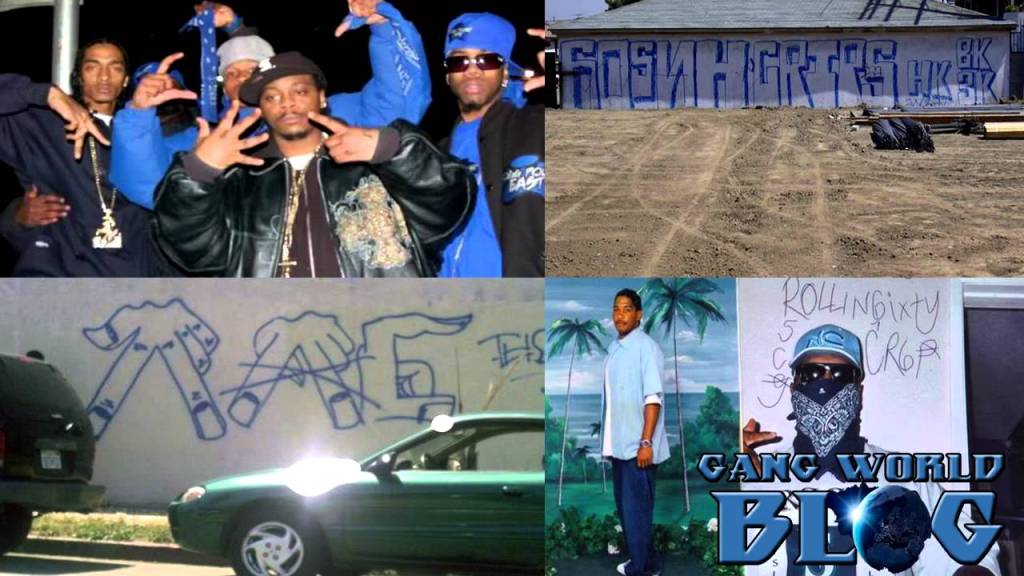
As discussed earlier, the “tragic” framing method has more of a negative outlook on the person being discussed. Nipsey Hussle’s gang violence will always linger over him no matter how much right he does. Being part of the Rolling 60’s, which can arguably be one of the “biggest and baddest” gangs in Los Angeles will always be a reason to name Hussle as the bad guy and he should be somewhat punished for participating in gang violence. It is easy to see gang members as scapegoats to the bigger problem that our school and justice systems are failing. Even bigger, our government is failing the people with making it almost impossible to afford living in the states, pushing people into the “ghetto” or the “hood” where crime and gang violence is at its highest.
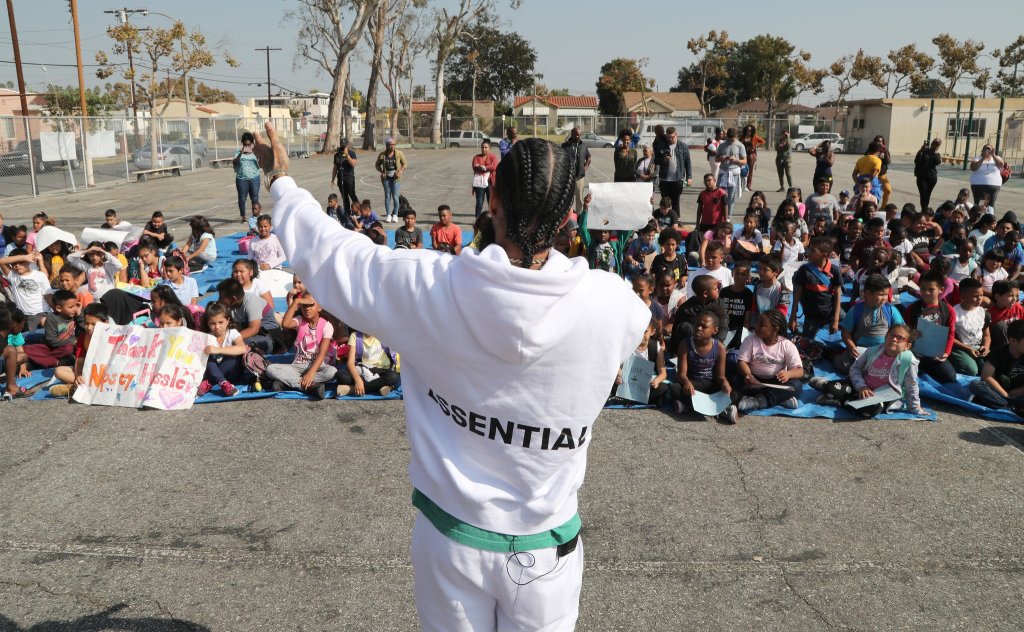
On the brighter side, Nipsey Hussle was also seen in the “comic” framing view, who took action in the community to make Los Angeles a better city. According to the New York Times article, and from many different interviews, Nipsey Hussle was very open with his past of gang violence and the Rollin 60’s. In recent years, with having children and a wife to care for he changed his direction to be more proactive, by investing in the community. He did this by working with his neighboring streets and cities to reduce gang violence, he purchased a strip mall, and planned to build new apartments complexes for his people (Arango, T.). This all lead to positive action and a conversation amongst different cities and political figures. Hussle set up meetings with the city’s police chief to discuss solutions of gang violence and knew he had the city to back him up with making this change. Unfortunately he never got that far because he too was a terrible outcome of gang violence, but his legacy will live on forever.
Citations :
Arango, T. (2019, April 19). Nipsey Hussle Was Hailed as a Hero. But to California Officials, He Was Still a Gangster. Retrieved from https://www.nytimes.com/2019/04/19/us/nipsey-hussle-death-california-gangs.html Arango, T. (2019, July 15). Nipsey Hussle Was Hailed as a Peacemaker by the LAPD. He Was Also Their Focus in an Investigation. Retrieved from https://www.nytimes.com/2019/07/15/us/nipsey-hussle-investigation.html
 Christina's Blog
This was a great use of tragic framing for Nipsey Hussle’s life and how he was portrayed after his death. I remember readings that New York Times article when it came out and it was a good choice for you to use for this weeks post. The same with comic framing. I like how you contrasted the two frames and I think that Nipsey’s life allows for that contrast better than most. I would have liked some more examples, maybe from different articles or social media posts, using him as a scapegoat for gang violence because of his past. The same with comic framing. But it was a good post nonetheless.
LikeLike
Great post this week extremely eye opening on a topic that does not get enough attention. I really enjoyed all the detail you put in this week a lot of great information that can inform a person who has no idea who and what Nipsey Hussle was doing. A citing error is present in your first sentence, easy fix. A suggestion I would make is to cite credible sources when defining terms. Other than that great post! 🙂
LikeLike
You have constructed a clear contrast with tragic/comic here. Remember, you’ll want to set up how each method works (drawing upon the readings and the reading reports we are working on together in class) to help strengthen your posts.
Indeed, that is also designed to help you get a strong grasp on the method. Here, you are highlighting first how his background leads to mainstream news media presenting him as a scapegoat. Then, you identify ways he contributed to the community. The first is about the framing of his story; the second is about his actions (and you would need to tie this more to how the story is told about him, if you want a clean contrast in the news framing).
Ideally, you would look at how *he* frames something, within his work, rather than looking to external news coverage. You can look outside the artist’s work (framing does help us make sense of news coverage, as well), but you are going to have a much harder time pulling all the posts together at the end of the semester if your “text” is outside sources weighing in.
Alternatively, you could reframe it and have the persona “Hussle” (the image/brand of the artist) as your text, rather than his work. That’s an option that might work well for you, given that you do tend to look at how people talk about him, rather than at what he personally produced.
Either way, that may alter some of what you pull from this post for the final. You might want to make that decision soon (as the next post is half-way through the assignment), to help guide you in the second unit of the course.
Keep at it. You’re making good progress, truly!
LikeLike